Saturday, February 26, 2011

A New Moth in the Garden


The Life Sciences department welcomes a new moth species to the Tropical Butterfly House: the polyphemus moth. With a wing span of six inches (15 cm) and stunning eyespots, this moth gets its name from one of the Cyclops of Greek mythology.


Antheraea polyphemus, the polyphemus moth, is a US native and member of the large family of Saturnidae, or silk moths. The silk moth family, which also includes the atlas moth and the African luna, is characterized by its pupae, which are wrapped in heavy silk cocoons.


Saturnidae are striking in other ways, too. Many of them are large, with stout, fuzzy bodies, impressive wingspans and enormous antennae. The atlas moth has the greatest wingspan of any Lepidoptera – up to 11 inches (29 cm). Surprisingly these large moths have vestigial mouth parts and lack digestive systems. Unlike butterflies, which use nectar for energy, saturnid moths consume all the food they need as larvae, and focus their adult lives on activities associated with reproduction. Their large antennae detect the pheromones of potential mates, and help them find and court each other in the few days they have in the adult form.

The cocoons for these "hand-some" moths arrived at the end of January and are just now beginning to emerge. Visit our Tropical Butterfly House and see if you have an eye for spotting them - but please, don't touch!


Thanks to Animal Caretaker Cari Garand and her cell phone for the polyphemus moth photos.
Read more!

Tuesday, February 22, 2011

Vinegaroon Babies?


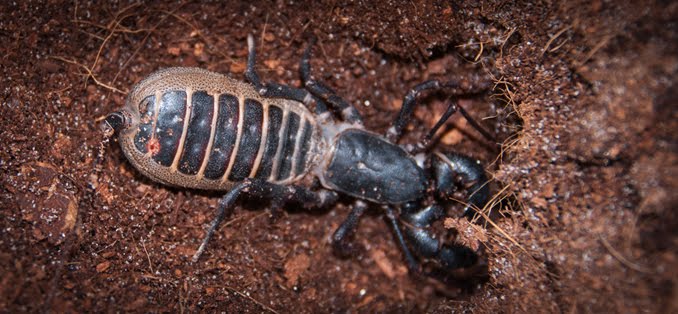
If you ever take a walk through the Insect Village at Pacific Science Center, you may have noticed the vinegaroon (vih-nih-guh-roon). This animal is one of our non-insect arthropods, and it is closely related to scorpions. Recently, when animal caretakers passed by the cage, they found themselves doing a double-take. When did the vinegaroon get so fat?!?!


Like all arthropods, vinegaroons have a hard exoskeleton that they must molt as they grow. When we looked at our vinegaroon a few months ago, we thought it appeared a little overdue for a molt. You can often tell when an arthropod is close to molting: Their bodies may expand or contract rapidly, they may change color, and usually the joints in between their exoskeletal plates begin to stretch out. This is what we noticed with our vinegaroon. But when it still had not molted after a few weeks, we started to get concerned.

Luckily, we got a timely visit from a former Animal Caretaker and insect specialist, Julie LaTurner. After a short observation, Julie had a hunch that something else was going on. She suspected that our vinegaroon was gravid, a term used instead of ‘pregnant’ for egg-laying species.


Few people have had much success getting vinegaroons to reproduce in captivity. A gravid vinegaroon excavates a chamber and walls herself in before producing her eggs. Our vinegaroon was probably seeking a place to burrow. In the exhibit cage, we use sand as a substrate, which is difficult for vinegaroons to dig through. But once we provided a better substrate for her to burrow, she went to work.


At first we were encouraged when the gravid vinegaroon immediately disappeared into her substrate. But then we again became concerned when we didn’t see her for a couple of weeks, so we checked through the substrate to make sure she wasn’t dead. Sure enough, we found her burrowed deep in the soil, with a large egg sac attached to her abdomen. Julie was right!


Inside the burrow, the vinegaroon will produce an egg sac that will remains attached to her body until her eggs are ready to hatch. When they hatch, the babies crawl out of the sac and onto their mother’s back where she protects them until they go through their first molt. After that, the babies leave the burrow. The mother stops eating while tending her eggs. She usually does not live long after the babies become independent.


Luckily, our vinegaroon’s second burrow is right up against the side of her enclosure, so we can check up on her through the clear walls (we keep it covered most of the time). We are not sure when her eggs will hatch. Little is known about raising vinegaroon hatchlings in captivity, and the odds are against us. But we will still root for the best, and hope to soon welcome new hatchlings into our collection.

While our gravid vinegaroon is on maternity leave, a younger, non-gravid vinegaroon is taking her place on-exhibit.

Read more!

Saturday, February 19, 2011

Fresh Sheet – February 19, 2011


Two shipments of pupae arrived this week to celebrate Presidents’ Day weekend. Check them out!


Suriname

05 - Parides sesostris (Emerald-patched Cattleheart)
10 - Battus polydamas (Polydamus Swallowtail)
20 - Heraclides thoas (Giant Swallowtail)
40 - Heraclides anchisiades (Ruby-spotted Swallowtail)
15 - Papilio androgeus (Androgeus Swallowtail)
05 - Heliconius melpomene (Postman)
40 - Heliconius doris (Doris Longwing)
15 - Heliconius hecale (Tiger Longwing)
30 - Dryas iulia (Julia Longwing)
25 - Catonephele orites (Orange-banded shoemaker)
05 - Nessaea aglaura (Aglaura Olivewing)
05 - Biblis hyperia (Red Rim)
40 - Caligo memnon (Owl Butterfly)
15 - Phoebis sennae (Cloudless Sulphur)

Total = 270


El Salvador

20 - Catonephele numilia (Numilia)
15 - Dryadula phaetusa (Banded Orange Heliconian)
10 - Heliconius hecale (Tiger Longwing)
15 - Heliconius hortense (Mountain Longwing)
20 - Lycorea cleobaea (Large Tiger)
48 - Morpho peleides (Blue Morpho)
30 - Myselia cyaniris (Blue Wave Butterfly)
40 - Myscelia ethusa (Royal Blue Butterfly)
20 - Papilio androgeus (Androgeus Swallowtail)
10 - Papilio erostratus (Dusky Swallowtail)
05 - Parides photinus (Queen of Hearts)
10 - Prepona omphale=archeoprepona omphale (Blue Belly-Button)
16 - Siderone nemesis (Red-striped Leafwing)

Total = 259

Grand total = 529

“Fresh Sheet” is our weekly shipment report of pupae on display in the emerging window. Visit Pacific Science Center’s Tropical Butterfly House and meet our newest residents.


Read more!

Wednesday, February 16, 2011

Say, ”Ax – a - WHAT?”


Of all the animals in our care, two stand out as having the most unpronounceable names.


The name “anemones” is familiar but a tongue twister for most kids:


Say it slowly to keep all those m’s and n’s in order!


Furthermore ...


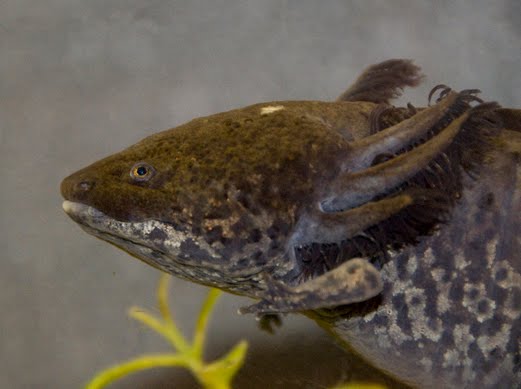
The name of our strange looking salamander, the axolotl, is a mystery to most. The name comes to us through Spanish from Nahuatl, the language spoken by the indigenous Aztec people who first observed these animals.


Say it to rhyme with “max a bottle.”


It can be fun to talk about and learn the words scientists use to describe the world around them. At times, it is also crucial in order to communicate. Learning vocabulary and using it correctly makes it possible to communicate despite the barriers of language, distance and time.

But don't let scientific terms scare you or create a barrier to learning. If you see something new, exciting or fascinating, don’t worry that you can’t describe it technically – say what you saw. Ultimately science is about observation. If you love to observe, you can become motivated to learn the vocabulary.
Read more!