Saturday, April 28, 2012

Fresh Sheet – April 28, 2012


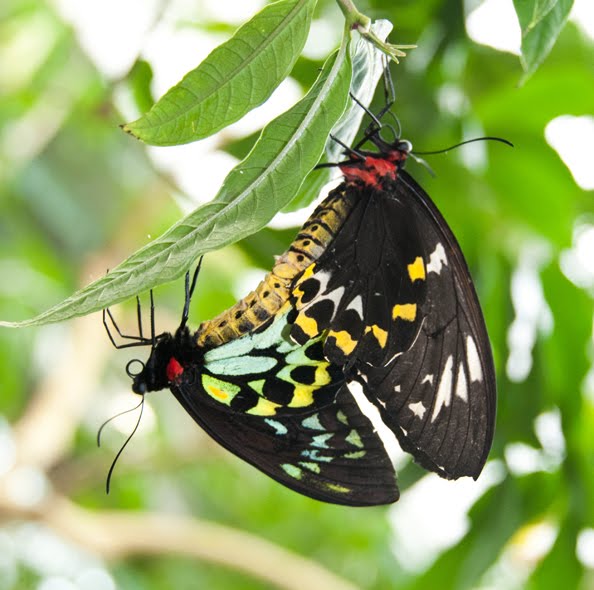
Five more Ornithoptera priamus (New Guinea Birdwing) pupae join this week’s shipments of chrysalides from all over the world. Big and small - we love them all!


El Salvador

15 - Battus belus (Belus Swallowtail)
20 - Caligo memnon (Owl Butterfly)
20 - Catonephele numilia (Numilia)
10 - Consul fabius (Tiger Leafwing)
05 - Heliconius erato (Small Postman)
10 - Heliconius hecale (Tiger Longwing)
20 - Lycorea cleobaea (Large Tiger)
60 - Morpho peleides (Blue Morpho)
30 - Morpho polyphemus (White Morpho)
15 - Myselia cyaniris (Blue Wave Butterfly)
25 - Myscelia ethusa (Royal Blue Butterfly)
10 - Papilio cresphontes (Giant Swallowtail)
10 - Papilio erostratus (Dusky Swallowtail)
25 - Parides montezuma (Montezuma Cattleheart)
20 - Parides photinus (Queen of Hearts)
15 - Archeoprepona demophon (One-spotted Prepona)
11 - Tithorea harmonia (Harmonia Tigerwing)

Total = 321

LPS-LLC

20 - Athyma perius (Common Sergeant) THAILAND
10 - Catopsilia scylla (Orange Emigrant) MALAYSIA
10 - Cethosia cyane (Leopard Lacewing) THAILAND
21 - Charaxes brutus (White-barred Charaxes) KENYA
20 - Charaxes castor (Giant Charaxes) KENYA
20 - Charaxes cithaeron (Blue-spotted Charexes) USA
30 - Chilasa clytia (Common Mime) THAILAND
10 - Doleschalia bisaltide (Autumn Leaf) PHILIPPINES
10 - Euphaedra neophron (Gold-banded Forester) KENYA
10 - Hypolimnas bolina (Blue moon) PHILIPPINES
10 - Idea leuconoe (Paper Kite) PHILIPPINES
05 - Ornithoptera priamus (New Guinea Birdwing) USA
04 - Papilio demodocus (Orchard Swallowtail) KENYA
30 - Papilio lowii (Sunset Swallowtail) PHILIPPINES
10 - Papilio palinurus (Banded Peacock) PHILIPPINES
20 - Papilio polytes (Polite Swallowtail) PHILIPPINES
10 - Papilio rumanzovia (Crimson Swallowtail) PHILIPPINES

Total = 250

Grand Total = 571

“Fresh Sheet” is our weekly shipment report of pupae on display in the emerging window. Visit Pacific Science Center’s Tropical Butterfly House and meet our newest residents.

Read more!

Wednesday, April 25, 2012

The Big Move

If you've walked through Pacific Science Center's Insect Village lately you probably noticed a fenced off area with big holes in the walls. It's the start of some major remodeling that involves some of our animals, many of which will soon be moved.


In a few months, Pacific Science Center's Building 2 will house an exciting new exhibit, Professor Wellbody's Academy of Health and Wellness. While staff and community members are excited, readers of this blog may be wondering, "where will the animals go?" Don't worry! They are not going far, just around the corner into the Ackerley Family Gallery that also houses our Insect Village.


If you are looking for your buddies the naked mole-rats, snakes, axolotls or Lydia the leopard gecko, you will now have a slightly different set of landmarks to follow. As you head into Building 2 from the Dinosaurs, take a left at Science on a Sphere and head into the Insect Village. Go past the giant mantis, through the Insect Village, and then in the doorway to the right of the giant scorpion. You've found their new home.


To prepare for this move, we've made some modifications behind the scenes as well. First and foremost, we had to cut a new door into the wall that separates Building 2 from the Ackerley Family Gallery. This wall was the former exterior of Pacific Science Center and is made of concrete composite. We worked closely with a structural engineer to preserve the integrity of the wall, which meant the door was a little smaller than we hoped for.

Our animals have high demands for power. All are cold blooded, and develop health and behavior problems if not kept at the correct temperatures. The cages require heat lamps and under cage heat, as well as pumps, aeration, humidifiers, lighting and air fans. A new power circuit was added to ensure continuous climate control. 

While we know we will need to watch them closely in their new surroundings, we believe the animals will like this location better. There will be natural light, better sound control, and a more enclosed area which they should find calming. We are prepared to make some adjustments, but anticipate a smooth transition for the animals.
Read more!

Sunday, April 22, 2012

Manduca: Part Two


Back in September 2011, we did a blog story about raising Tobacco hornworm (Manduca sexta) caterpillars. The stunning blue caterpillars were fun to raise and did well for us. When they pupated, we carefully placed each one in a hollow drilled into a piece of hardwood, which simulates their natural instinct to burrow into a small place during metamorphosis. A few weeks later, we enjoyed the one moth that emerged from pupation.


The other pupae were less forthcoming. After a month of waiting, we moved the pupae out of their dedicated exhibit cage. There are few sights more boring than a cage with a piece of wood in it, and no evidence of life. Instead, the pupae were moved in with the stick insects, where they spent the winter and the first part of spring.


But on April 16, we came in to a little surprise. One of the moths had emerged at last! The change in day length probably stimulated her to complete her transition from pupa to adult. Many insects overwinter in the pupa stage, as a way to avoid the worst temperature drops and the lack of food the cold months bring. The ability to suspend development until the correct environmental cues occur is called diapause. For those who enjoy scholarly articles, we include the following link http://jeb.biologists.org/content/91/1/331.full.pdf, one of many for this species whose diapause has been closely studied.

Our new moth is now flying in the Tropical Butterfly House. Though neither tropical nor a butterfly, she seems to enjoy the warmth, space, and abundant flowers. Perhaps other Manduca moths emerging from diapause will soon join her.
Read more!

Saturday, April 21, 2012

Fresh Sheet – April 21, 2012


A new Blue Morpho, Morpho granadensis, makes it’s appearance this week in the Tropical Butterfly House. How different is it? Come see for yourself!

Costa Rica

17 - Anartia fatima (Banded Peacock)
12 - Anteos chlorinde (White Angled Sulphur)
12 - Battus polydamas (Polydamus Swallowtail)
04 - Brassolis isthmia (Small-spotted Owl)
08 - Caligo atreus (Yellow-Edged Giant-Owl)
08 - Caligo eurilochus (Forest Giant Owl)
10 - Caligo memnon (Owl Butterfly)
40 - Danaus plexippus (The Monarch)
06 - Dryas iulia (Julia Longwing)
33 - Dryadula phaetusa (Banded Orange Heliconian)
08 - Eryphanis polyxena (Purple Mort Bleu Owl)
10 - Eueides isabella (Isabella’s Longwing)
08 - Hamadryas amphinome (Red Calico)
04 - Hamadryas arinome (Blue Calico)
13 - Hamadryas feronia (Variable Calico)
13 - Hamadryas laodamia (Starry Night Calico)
15 - Heliconius charitonius (Zebra Longwing)
08 - Heliconius clysonymus (Clysonymus Longwing)
17 - Heliconius cydno (Cydno Longwing)
10 - Heliconius doris (Doris Longwing)
10 - Heliconius erato (Small Postman)
32 - Heliconius hecale (Tiger Longwing)
08 - Heliconius hewitsoni (Hewitson’s Longwing)
24 - Heliconius ismenius (Ismenius Longwing)
19 - Heliconius melpomene (Postman)
18 - Hypna clytemnestra (Silver-studded Leafwing)
08 - Morpho granadensis (Granadensis Blue Morpho)
40 - Morpho peleides (Blue Morpho)
10 - Myselia cyaniris (Blue Wave Butterfly)
20 - Papilio anchisiades (Ruby-spotted Swallowtail)
08 - Papilio cresphontes (Giant Swallowtail)
12 - Papilio polyxenes (Black Swallowtail)
09 - Parides iphidamas (Transandean Cattleheart)
09 - Philaethria dido (Scarce Bamboo Page)
03 - Siproeta epaphus (Rusty-tipped Page)
18 - Siproeta stelenes (Malachite)

 Total = 504

  “Fresh Sheet” is our weekly shipment report of pupae on display in the emerging window. Visit Pacific Science Center’s Tropical Butterfly House and meet our newest residents.
Read more!