Saturday, January 28, 2012

Fresh Sheet – January 28, 2012


Four different species of Owl pupae arrived this week from Costa Rica. Come meet them at a fruit dish!


Costa Rica

8 - Agraulis vanilla (Gulf Fritllary)
8 - Caligo atreus (Yellow-Edged Giant-Owl)
20 - Caligo eurilochus (Forest Giant Owl)
15 - Caligo memnon (Owl Butterfly)
23 - Catonephele numilia (Numilia)
34 - Danaus plexippus (The Monarch)
27 - Dryas iulia (Julia Longwing)
21 - Dryadula phaetusa (Banded Orange Heliconian)
08 - Eryphanis polyxena (Purple Mort Bleu Owl)
16 - Greta oto (Glasswing)
06 - Hamadryas februa (Gray Calico)
23 - Hamadryas feronia (Variable Calico)
12 - Hamadryas laodamia (Starry Calico)
20 - Heliconius charitonius (Zebra Longwing)
29 - Heliconius cydno (Cydno Longwing)
21 - Heliconius doris (Doris Longwing)
26 - Heliconius hecale (Tiger Longwing)
08 - Heliconius hewitsoni (Hewitson’s Longwing)
04 - Papilio torquatus (Band-gapped Swallowtail)
20 - Parides iphidamas (Transandean Cattleheart)
06 - Prepona omphale (Blue Belly-Button)
14 - Siproeta stelenes (Malachite)


Total = 504


Read more!

Wednesday, January 25, 2012

Snow Daze


Back in November, we discussed our winter snow plans, and what it would take to ensure that the animals safely survived through closures due to snow. Little did we know how very necessary this training would be. During the snow storms last week, Pacific Science Center was closed for two days, and the Life Sciences team was unable to get to the facility. The animals were in good hands though.

Camp-In Coordinator Merrick Neville was ready for the task on Wednesday. She walked in through the snow, fed all the animals, and had only one real concern. A sea star in the tide pool exhibit was creating a cloud of murky water around itself. Might it be injured, or even dead?


After a series of photos, questions and observations, we concluded that Merrick had probably seen spawning behavior and the sea star was ok.


The next day, Thursday, all of Seattle was under a blanket of ice and snow. The only hint of movement was IMAX Supervisor Jenn Bentz, striding through the snow to come take care of the animals. Because Merrick had discharged her duties with great care, Jenn found things in good condition, but she too had a question. Normally our horticulture crew meticulously grooms the plants and removes any butterflies that may have died in the exhibit space. Jenn was unprepared for the “au natural” appearance of the butterfly house when it does not receive this in-depth care, and called to make sure everything was right.


The Life Sciences Department is deeply indebted to both of these stalwart helpers, and to Data Processor Laura Mazzocchi, who spent Thursday on call in case additional help was needed. We are also most grateful to volunteer Terry Pagos, who came in on an unscheduled Friday because she knew we would need an extra hand.

Without Jenn’s and Merrick’s help, some of the following would surely have happened:

Dangerously low humidity in the mole-rats: Naked mole-rats do not drink water. All of their moisture needs come from food and humidity in the air. With our heated buildings in winter, it is critical to monitor and adjust humidity daily. Had the colony been in a low humidity situation for two full days, they would have suffered from skin problems, and possibly from digestive and respiratory issues as well.


Carnage in the tide pool: Most of our tide pool animals are carnivores, and unlike many exhibits, which sequester by species, ours have free access to all parts of the exhibit. Without someone feeding them, some of our more aggressive anemones and sea stars might have taken matters into their own hands (or tentacles) and eaten their exhibit mates.

Lost butterfly lives: An estimated 60 – 100 butterflies emerge every day, and must be placed on exhibit within a few hours. Without our emergency coverage, they would have languished and died in their emerging chamber, never able to fly.

It is hard to speculate on what other unknowns might have happened. Instead, we are happy to focus on the actual outcome – healthy, happy animals and the knowledge that we have great co-workers who have our backs when things get snowy.

Read more!

Saturday, January 21, 2012

Fresh Sheet – January 21, 2012


This week’s pupae shipments arrived safely in spite of delays from the Monday holiday and Seattle’s "Snow-mageddon". And once again, we have representatives of three different species from genus Archeoprepona/Prepona. Visit our Tropical Butterfly House and enjoy the warmth!


Suriname

05 - Parides sesostris (Emerald-patched Cattleheart)
06 - Battus polydamas (Polydamus Swallowtail)
28 - Heraclides thoas (Thoas Swallowtail)
40 - Heraclides anchisiades (Ruby-spotted Swallowtail)
10 - Heliconius erato (Small Postman)
10 - Heliconius melpomene (Postman)
05 - Heliconius hecale (Tiger Longwing)
30 - Dryas iulia (Julia Longwing)
20 - Catonephele orites (Orange-banded Shoemaker)
40 - Anartia amathea (Scarlet Peacock)
10 - Archeoprepona demophoon (Hubner’s Prepona)
06 - Biblis hyperia (Red Rim)
50 - Caligo memnon (Owl Butterfly)
10 - Tithorea harmonia (Harmonia Tigerwing)

Total = 270


El Salvador

20 - Battus belus (Belus Swallowtail)
25 - Caligo memnon (Owl Butterfly)
30 - Catonephele numilia (Numilia)
19 - Consul fabius (Tiger Leafwing)
12 - Heliconius hecale (Tiger Longwing)
30 - Heliconius hortense (Mountain Longwing)
10 - Heliconius ismenius (Ismenius Longwing)
23 - Lycorea cleobaea (Large Tiger)
35- Morpho peleides (Blue Morpho)
20 - Morpho polyphemus (White Morpho)
25 - Myselia cyaniris (Blue Wave Butterfly)
25 - Myscelia ethusa (Royal Blue Butterfly)
10 - Papilio torquatus (Band-gapped Swallowtail)
10 - Parides iphidamas (Transandean Cattleheart)
20 - Archeoprepona demophon (One-spotted Prepona)
30 - Prepona omphale (Blue Belly-Button)
12 - Tithorea harmonia (Harmonia Tigerwing)

Total = 356


GRAND TOTAL = 626


Read more!

Saturday, January 14, 2012

Fresh Sheet - January 14, 2011


“Fresh Sheet” is our weekly shipment report of pupae on display in the emerging window. Visit Pacific Science Center’s Tropical Butterfly House and meet our newest residents.


Philippines

20 - Papilio rumanzovia (Crimson Swallowtail)
116 - Papilio lowii (Sunset Swallowtail)
20 - Graphium agamemnon (Tailed Jay)
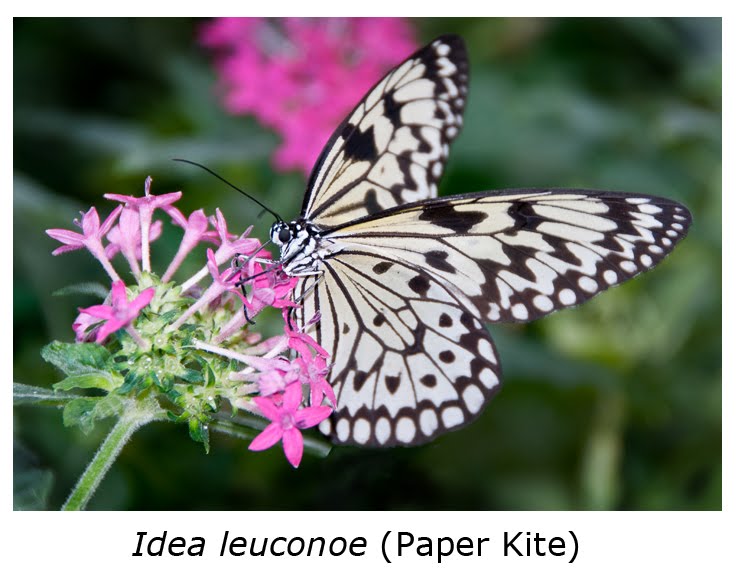
100 - Idea leuconoe (Paper Kite)
19 - Pachliopta kotzeboea (Pink Rose)
27 - Doleschalia bisaltide (Autumn Leaf)
41 - Parthenos sylvia philippensis (The Clipper)
16 - Papilio polytes (Polite Swallowtail)
40 - Cethosia biblis (Red Lacewing)
20 - Ideopsis juventa (Wood Nymph)
100 - Hypolimnas bolina (Blue moon)

Total = 519

Read more!