Tuesday, August 30, 2011

Late Summer Tide Pool Collecting


This weekend, Cari Garand and Wendy Hanson did an end of summer tide pool collecting trip, along with volunteer John Aurelius who generously lets Pacific Science Center collect from his beach at Indianola.


Trained beach naturalists, Cari and Wendy collected carefully, taking only organisms allowed on our permit, and leaving animals as they found them if they could not be used in our tide pool exhibit.


Here are the animals that Cari and Wendy brought back:
Hermit crabs: 15

Mottled Star: smaller ones, 4

Shrimp: 2 very little

Limpets: no large ones, but many small ones came in attached to other animals

Painted Anemone: 1

Aggregating Anemone: 4 mostly came attached to stuff

Moon Snail Egg Cases: 3

Barnacle covered rocks: 10

Chitons: 3, 2 bigger mossy or possibly hairy ones and one small lined

Snails: 8


In addition to the animals we might expect from a collection, our team spotted a bunch of the coolest looking items we’ve seen! The gelatinous, finger like objects are squid egg cases, and you can actually see the baby squids floating around inside the case.


Of course, Cari and Wendy wished they could bring some of these cases back, but knew that our system would not support such large, free swimming predators as mature squids. So the cases stayed on the beach.


Cari and Wendy used their professional experience to assess which animals would work best in our Puget Sound Salt Water Tide Pool. But being professional does not mean the collectors didn’t feel the wonder and excitement of being on a beach.


We encourage everyone to visit one of our local beaches, and spend time getting to know Puget Sound better. Bring your camera; you never know what amazing pictures may be out there.

Read more!

Saturday, August 27, 2011

Fresh Sheet – August 27, 2011


Philippines

50 -Papilio palinurus (Banded Peacock)
30 - Papilio rumanzovia (Crimson Swallowtail)
100 - Papilio lowii (Sunset Swallowtail)
14 - Papilio hipponus (Hipponus Swallowtail)
100 - Idea leuconoe (Paper Kite)
08 - Pachliopta kotzeboea (Pink Rose)
18 - Graphium agamemnon (Tailed Jay)
78 - Doleschalia bisaltide (Autumn Leaf)
20 - Parthenos sylvia philippensis (The Clipper)
50 - Papilio polytes (Polite Swallowtail)
100 - Hypolimnas bolina (Blue moon)

Total = 568

“Fresh Sheet” is our weekly shipment report of pupae on display in the emerging window. Visit Pacific Science Center’s Tropical Butterfly House and meet our newest residents.


Read more!

Thursday, August 25, 2011

The Number One Question About Naked Mole Rats


Everything about naked mole rats is fascinating, and Pacific Science Center’s staff are eager to chat about them. Want to know about eusocial behavior? These mammals are a great example. Excited about the latest pups? So are we! Have you followed the adventures of the dispersing morph and want help finding him? Maybe we can help.

But before we can answer any of these questions, we have to address another question, one more urgent:

“Are some of the animals dead?”


We get this question daily, often several times per day. Adult naked mole rats have long life expectancies, and the death of a grown colony member is an extremely rare event for us. So why do we get so many reports of dead animals, and how can a casual viewer separate the living from the dead?

Naked mole rats’ metabolism is adapted to the low oxygen and stable temperature of an underground tunnel. Their respiration and heart rate are lower than one would expect for such a small animal. Thus, there are fewer signs of life to begin with!

Their greyish skin is a second contributor. To many people, the color has an unhealthy appearance, but pinkish grey is the natural color of a healthy naked mole rat.

Additionally, naked mole rats have a habit of sleeping in very relaxed positions. They often stretch out on their backs, with legs splayed in the air, for a long, motionless, deep sleep. Their favorite snoozing spots are over heat exchange ducts. Sleeping naked mole rats will tolerate other animals walking over them, and even kicking them, often showing little or no response.

Small wonder, then, that a grey, motionless, splayed out form would appear lifeless.


We have a few pointers for observing possibly “dead” mole rats before jumping to conclusions.

• If they are in a tube over a heat duct, watch them closely. Animals go here for their deepest sleep, and often lie motionless. When another animal crawls over them, you may see subtle signs of life – a twitch or flexing of muscle. That’s all you need to know they’re ok

• If they are pink and grey, this is a good sign. In the rare cases where an animal has been found dead, it was discolored, with purple extremities.

• Naked mole rats often rest on their backs and spread their legs out. This is a sign of relaxation. An animal that has died would more likely be rigid, rather than relaxed.

• Colony members are not tolerant of dead mole rats in their chambers. They would not ignore or walk over a dead colony mate, but would attempt to drag the animal to the most remote area of the enclosure. So if you see a mole rat being stepped on, it is probably alive.

• This is not a pleasant subject, but in the warm air of the colony, a naked mole rat that had perished would begin to deteriorate rapidly. Their stomach contents and skin would begin to fill with gases, and the animal would appear bloated.


We are always ready to check out any report of possible unhealthy or dead animals, but we also want to minimize the number of times we disturb animals that are simply resting. With so many people viewing our exhibits, it is often a visitor who sees a problem first and reports it. We hope with these criteria, that you have a better idea of when help is needed, and when a mole rat is just enjoying a nap.

Read more!

Sunday, August 21, 2011

Fresh Sheet – August 21, 2011


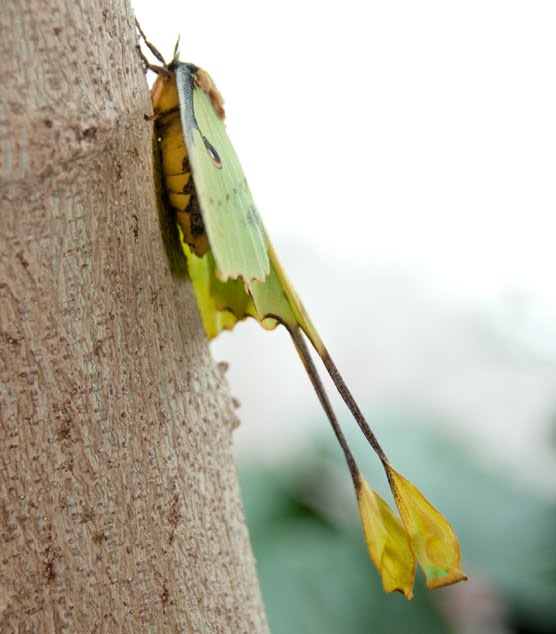
Sixteen of the 607 pupae we received this week for the Tropical Butterfly House are not even butterflies! That’s right, they’re moths! Come see all our Lepidopteran species!


El Salvador

35 - Caligo memnon (Owl Butterfly)
32 - Catonephele numilia (Numilia)
05 - Consul fabius (Tiger Leafwing)
09 - Dryadula phaetusa (Banded Orange Heliconian)
32 - Heliconius charitonius (Zebra Longwing)
12 - Heliconius erato (Small Postman)
25 - Heliconius hecale (Tiger Longwing)
20 - Heliconius ismenius (Ismenius Longwing)
50 - Morpho peleides (Blue Morpho)
25 - Morpho polyphemus (White Morpho)
32 - Myscelia ethusa (Royal Blue Butterfly)
20 - Archeoprepona demophoon (One-spotted Prepona)
08 - Prepona omphale=archeoprepona omphale (Blue Belly-Button)

Total = 305

LPS LLC

16 - Argema mimosa (African Moon Moth) KENYA
10 - Athyma perius (Common Sergeant) THAILAND
10 - Catopsilia pyranthe (Mottled Emigrant) THAILAND
10 - Catopsilia scylla (Orange Emigrant) THAILAND
04 - Cethosia biblis (Red Lacewing) PHILIPPINES
10 - Charaxes brutus (White-barred Charaxes) KENYA
03 - Charaxes castor (Giant Charaxes) KENYA
10 - Charaxes cithaeron (Blue-spotted Charaxes) KENYA
10 - Charaxes protoclea (Flame-bordered Charexes) KENYA
09 - Charaxes violetta (Violet-spotted Emperor) KENYA
10 - Doleschalia bisaltide (Autumn Leaf) PHILIPPINES
10 - Euploea core (Common Crow) THAILAND
10 - Graphium agamemnon (Tailed Jay) PHILIPPINES
40 - Hypolimnas bolina (Blue moon) PHILIPPINES
10 - Ideopsis vulgaris (Blue Glassy Tiger) MALAYSIA
10 - Papilio dardanus (Mocker Swallowtail) KENYA
20 - Papilio lowii (Sunset Swallowtail) PHILIPPINES
10 - Papilio memnon (Great Memnon) THAILAND
10 - Papilio nireus (Blue-banded Swallowtail) KENYA
05 - Papilio palinurus (Banded Peacock) PHILIPPINES
20 - Papilio polytes (Polite Swallowtail) PHILIPPINES
10 - Papilio rumanzovia (Crimson Swallowtail) PHILIPPINES
10 - Parthenos sylvia philippensis (The Clipper) PHILIPPINES
10 - Parthenos sylvia violaceae (Violet Clipper) MALAYSIA
05 - Pseudacraea lucretia (False Chief) KENYA
10 - Salamis anacardii (Clouded Mother Of Pearl) KENYA
10 - Tirumala limniace (Blue Tiger) THAILAND

Total = 302

Grand Total = 607

“Fresh Sheet” is our weekly shipment report of pupae on display in the emerging window. Visit Pacific Science Center’s Tropical Butterfly House and meet our newest residents.


Read more!